Case study · 01
Inspo Center
Shipping a unified digital media ecosystem—streaming, voice lounges, feeds, and publishing—on self-hosted infrastructure.
inspocenter.com ↗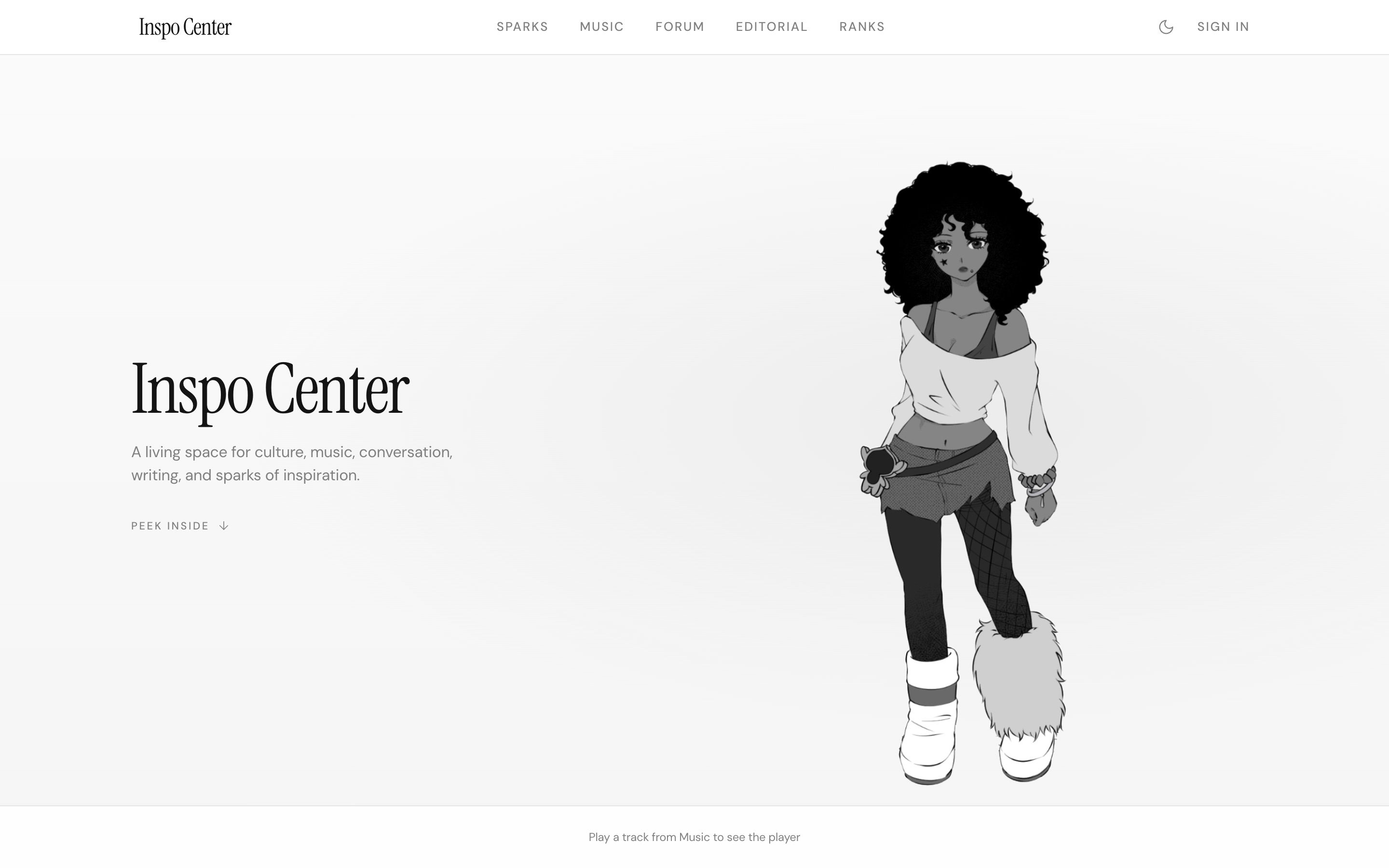
- Role
- Lead Full-Stack Engineer & Technical Project Manager
- Timeline
- 0→1 build
- Team
- 1 designer · 1 developer · me (lead)
- Focus
- Full-stack · Real-time media · Self-hosted
01
The problem
Creators were juggling separate tools for discussion (X), hangouts (Discord), long-form writing (Medium/forums), and music discovery (SoundCloud). Unifying those surfaces without interface bloat was the product bet. At the same time, real-time voice, video, and audio on third-party managed infrastructure produced steep operational bills—so the platform needed a lean, self-hosted bare-metal setup with high concurrent throughput on a disciplined budget. Orchestrating social feeds, threaded forums, editorial markdown, audio player state, and WebRTC signaling also demanded a resilient, strongly typed data and state pipeline.
02
Role & responsibilities
- Owned end-to-end architecture: React/TypeScript SPA, Supabase/Postgres data layer, and real-time media systems
- Specced, configured, and deployed a bare-metal Linux LiveKit SFU for low-latency voice/video
- Built persistent global audio and room controllers so playback and lounge state survive client-side route changes
- Designed PostgreSQL schemas and Row-Level Security for profiles, posts, forums, tracks, and private lounges
- Led the roadmap with a designer and developer—auth/feeds → forums → media pipelines → WebRTC rooms
- Managed growth ops: campaign allocation, conference/trade-show outreach, and alpha creator acquisition
03
Process
Frontend & state
React + TypeScript with end-to-end typed schemas (posts, comments, tracks, lounge rooms) aligned to Supabase. Custom surfaces for micro-posts, threaded forums, long-form editorial, and lounge grids that adapt to active participants—plus a global media layer that keeps music and voice connected across navigation.
Real-time media
Self-hosted LiveKit SFU on bare metal for sub-100ms WebRTC forwarding. Node JWT tokens for Supabase-authenticated room access. Music streaming exposed via Cloudflare Tunnel (cloudflared)—no open inbound ports—with chunked delivery to cut TTFB and protect origin storage.
Data & delivery
Multi-entity Postgres schemas with RLS enforcing admin/moderator/subscriber roles at query time. Supabase Realtime CDC for live notifications and thread updates. Roadmap sequenced into sprints; cost engineering deliberately avoided Agora/Twilio-style metered lock-in.
04
Execution
Shipped as a unified SPA: authentication and feeds first, then forum threads, media ingestion, and finally WebRTC lounges. Backend endpoints issued cryptographically signed room tokens; Cloudflare Tunnel insulated the origin media server from direct public exposure. Alongside engineering, I allocated organic and paid acquisition spend and pitched the platform at tech conferences and creative trade shows to recruit digital creators, podcasters, and independent musicians for alpha.
05
Impact
−70–80%
WebRTC cost vs. hosted PaaS
0
Public open ports on origin
100%
Uninterrupted audio across routes
RLS
Zero-trust data access at the DB
06
Learnings
"The highest-leverage product decision wasn't another feature surface—it was owning the real-time media stack. Self-hosting LiveKit and ingress via Cloudflare Tunnel turned a cost and security constraint into a durable architectural advantage, while a persistent global player made the multi-surface SPA feel like one product instead of five tabs."
Next case study
Fast Freight Solutions LLC →